Can’t believe how quickly October has come round! I always find this time of year a little weird with children and students going back to school and college and starting to feel the chill as well as losing the light at both ends of the day.
I’m sure I am designed to live in a hot country as I like to feel the sun on my back and am always so much more productive with more daylight hours. I know this summer has been difficult for many horse owners and yards with blistering heat during the day making training hard and also the lack of grass that is often of great benefit to the older horses.
However there doesn’t seem to have been the increase in weight of many horses and ponies and less laminitis. Please don’t become complacent though, as the Autumn flush of grass often hits when its least expected. We have had sunny days and lots of rain and that grass wants a final push before the soil returns to a temperature when its unable to continue growing so don’t be caught out.
Soil temperature plays a pivotal role in grass growth as it halts when the ground cools below 5°C, usually around October/November. Also, the reduced sunlight signals the grass to enter dormancy and conserves energy in its roots until the Spring when it warms up around March/April time.
This is the reason there is a danger of laminitis when its frosty and sunny as the sugars increase because of photosynthesis but the plant (grass) can’t use it to grow as the soil is too cold so its stored in the stem for a short while rather than being used – so rather like eating a stick of candy.
Hay and haylage prices are high too at the moment, as with lack of rainfall in the summer and blistering heat drying/burning the grass there has been less yield which always puts the price up due to supply and demand. Fuel prices always increase prices in everything, which also doesn’t help.
So it might be a hard winter for us all – we just have to hang in there and if you are loyal with your suppliers and treat them well, they will look after you.
Making Hay and Haylage
It never ceases to amaze me how many horse owners are unaware of how hay and haylage is actually made and the processes involved.
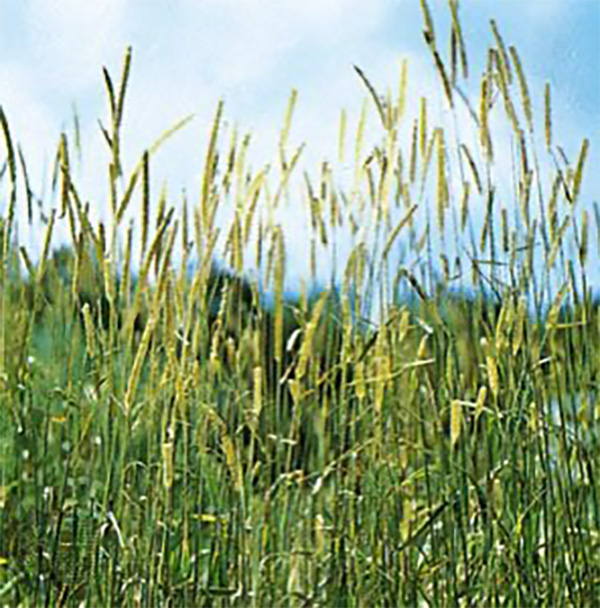
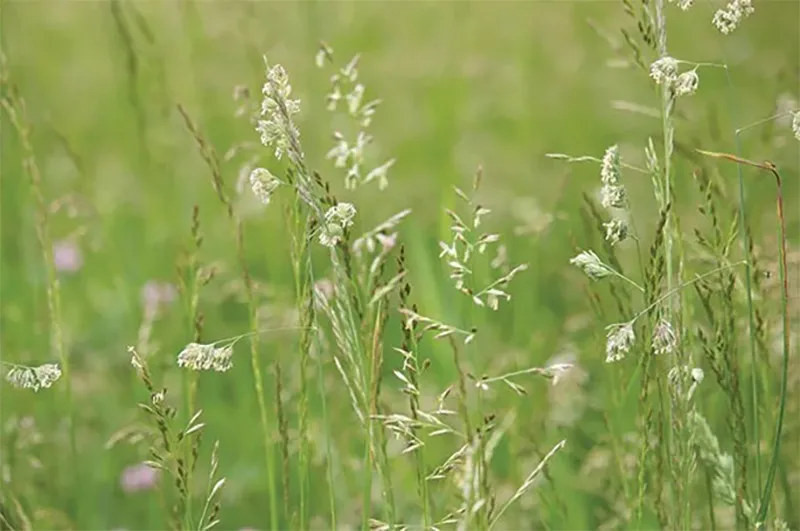
Firstly, they are mainly sown crops as not much real ‘meadow’ hay is grown any more with its wonderful abundance of good grasses such as timothy, fescues and maybe some clover from permanent pasture and Yorkshire fog, if its an old pasture or with damp conditions. These grasses give variety however they don’t yield much. Farmers tend to sow the hay or haylage crop now as they get better yield meaning more profit and more available to the horse owner.


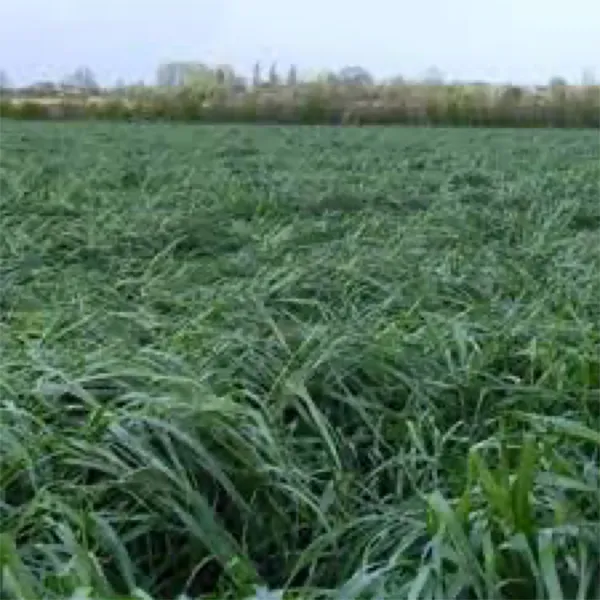
If you compare the grasses in the photos, you can easily see how much richer the Italian rye grass is, so very green and so much more leaf to it than the Timothy and Fescue grasses found in old fashioned meadows.
You can probably realise some of these grass mixes are like rocket fuel! With Italian ryegrass, perennial ryegrass and hybrid ryegrass making up a lot of the mix, yields are high, but in my opinion not always suitable for horses, especially with many yards now not able to offer winter turnout.
This grass mix is quite powerful and is really only good for horses in medium to hard work – those involving lots of cantering or intensive schooling sessions. Most of us, even if we ride 4-5 times a week (hacking & schooling 45mins) are only ever in light work as the horse isn’t expending much energy.
I find most people over estimate the amount of work their horse is in. This, alongside being stabled for longer periods of time and rugs that probably aren’t necessary with little turnout can spell disaster. Always ask yourself does your horse even need that feed in a bucket too? Perhaps they need just some simple fibre to carry any supplements or vitamins and minerals and this can often be found in a balancer.
Going back to the making of hay and haylage… this requires preparation of the soil bed for seed to be drilled. Most leys (grassland or pasture) last only 2-3 years before the field has to be ploughed and re-seeded.
Sometimes fertiliser needs to be applied and hopefully the weather is favourable to gain the yield and quality. Too much rain and the grass gets flattened or even rots, not enough and it doesn’t grow. Then obviously you need the right amount of sun for growth and the right weather to cut and then dry the crop.
Hay needs longer to dry out, and if its June hay its quite hard to make as it has a lot of sap in it. Hay is much harder to make and obviously requires a dry barn to store it. Haylage on the other hand is easier to make as it is wrapped and can be stored outside. However, the cost of netting and bale wrap is now really expensive, plus the diesel usage of these tractors when performing all their different jobs is high. Even red diesel is not cheap like it used to be. Perhaps this helps to realise why the costs creep up and up.
The Question of Ulcers
I often wonder if the increase in horses having ulcers is because of the use of haylage as it is more acidic than hay, or is it that we have better diagnostic techniques now and horses have always suffered unbeknown to us?
At this time of year there is lots more going on for the horse too. When they are changing coats, it’s a whole metabolic process – a bit like a snake shedding its skin. They can often become a little lethargic so its important to keep them motivated.
I’ve always fed a supplement called Kossolian when their coats are changing both in the Autumn and in the Spring to help. These are blood salts and were recommended to me by a racehorse trainer many years ago. If in doubt though do consult your vet or nutritionist.
I think the important things to consider are: giving your horse the right type and amount of roughage in the form of hay, haylage or even straw if they warrant it, as much turnout as possible or at least daily exercise of some form. Ensure the horse moves round the stable a lot if they have to be stabled for longer periods of time. This is because the gut works most efficiently when the horse is moving, i.e. think of them grazing, they gently mooch about. If they stand in just one place eating a great big hay net (as we’re often taught they should have constant access to it) then you have to be very mindful that you don’t cause an impaction resulting in colic.
People worry about how neat their beds are but surely having lots of little haynets or even piles of hay dotted around the stable to encourage the horse to move and a bed thats not quite as neat but your horse’s gut health is better I know which I would prefer. I do know though how wasteful some horses can be too!
Looking Towards Christmas
So why not use the following months up until Christmas to do some goal setting of what you would like to achieve for the following year and make a plan? I am always open to helping people achieve this. Perhaps work on your mindset, learn those dressage tests or even brush up on some bandaging or applying a poultice so that if the need arises you are really good at it!!
Maybe learn some anatomy, have a look at how horses move and perform some simple stretches on them or even a proper old-fashioned groom which was called strapping where muscles were enhanced and toned.
Finally, I have been selected to join the National Development Programme for Coaching Excellence which is a cross-discipline programme. There are 4 two day workshops at The National Training Centre in Leicestershire. There will be lots of research and case studies and it will be great to collaborate with other coaches and learn from each other.
I am particularly interested to look at the practices of coaches from other sports. My aim is to gain as much as possible from this programme so that I may pass on my knowledge and expertise in order to improve my riders’ experience.
Winter is a good time to increase rider fitness too, I’m making more use of the gym and am enjoying getting stronger both physically and mentally. Even if you don’t join a gym, walking is free and there are so many videos on YouTube that there really is no excuse not to make the most of them. Set yourself a little goal to be fitter so that you are better able to school or hack your horse as its then a little easier to stay on those spooks!!!
A note from Ron
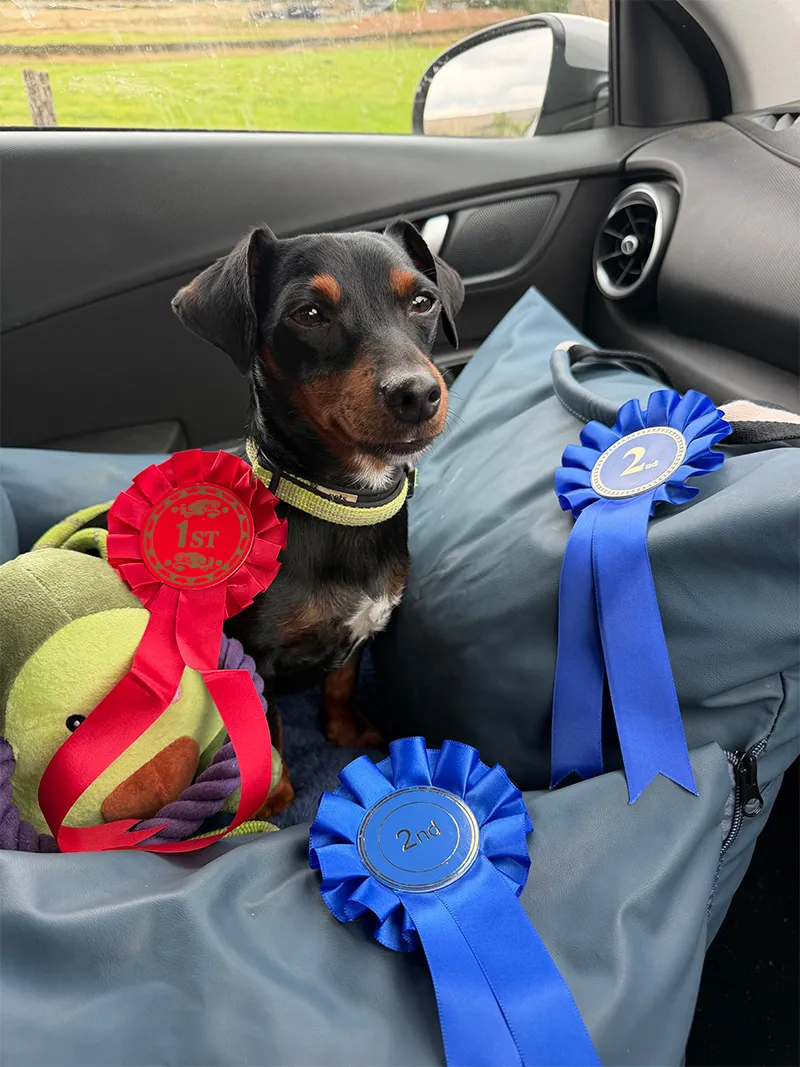
Ron as always, continues to make me smile and is part of my everyday life – he was so proud of his achievements at the recent dog show put on by Sue Toone at Cavallo Coffee Box which I know is a favourite stop off for many riders near Castleshaw.