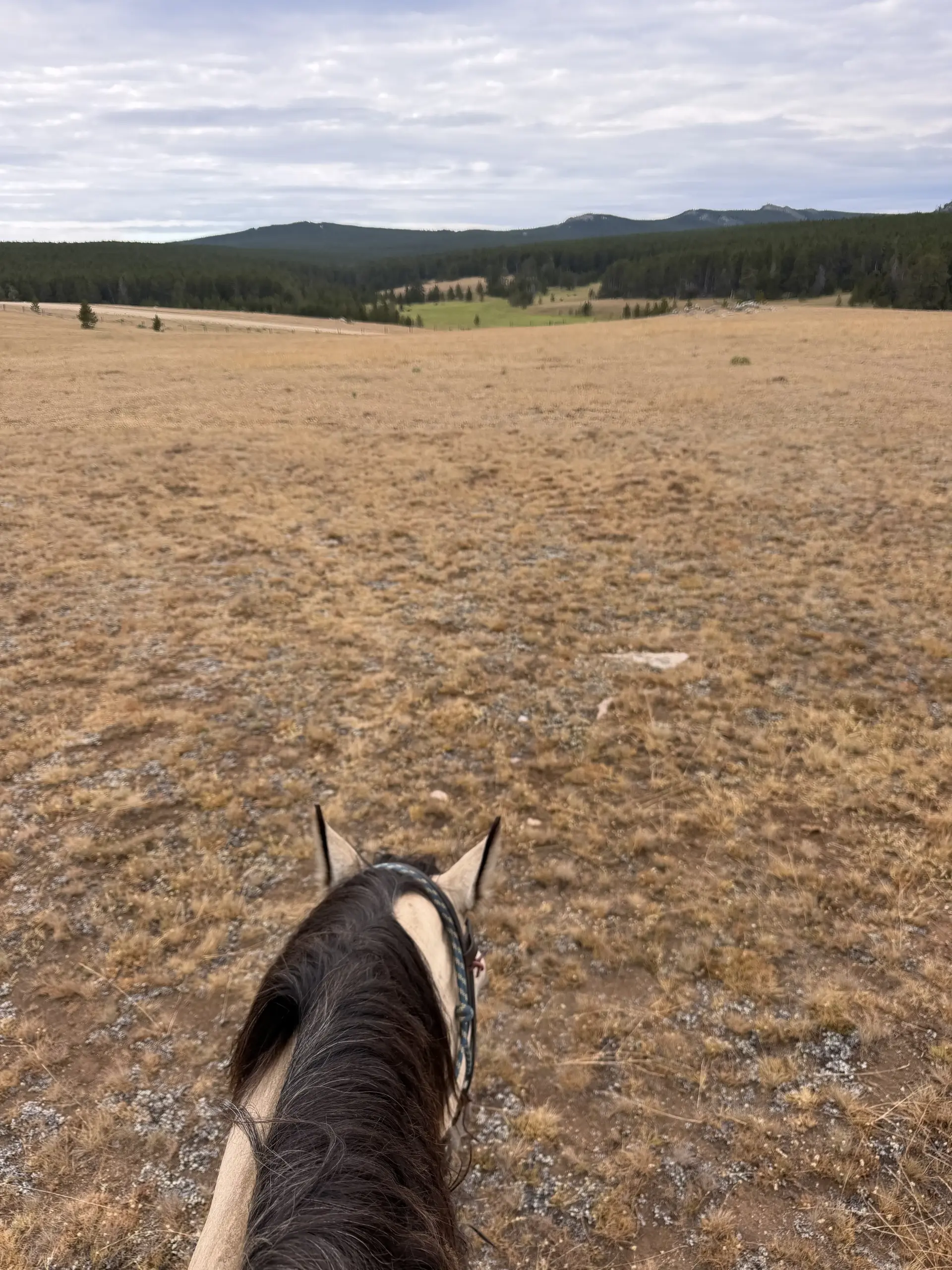
Welcome to my August blog, newly refreshed from my wonderful holiday of a lifetime – more like an adventure really. Some of you may know from my recent Facebook/Instagram posts of my venture into Western riding at the Klondike Ranch – a real working ranch in the aptly named Crazy Woman Canyon, Buffalo, Wyoming.
Two days prior to arriving at the ranch were spent at Cheyenne Frontier Days, which is the world’s largest outdoor rodeo and western celebration, also known as ‘Daddy of ‘em All!”
This runs for 10 days every July and features top-tier professional rodeo competitions, including bull riding, saddle and bareback bronc riding, steer wrestling, tie-down roping and barrel racing. There were also concerts and western heritage events taking place.
We were lucky enough to sit with a family who’s teenage daughter competed in barrel racing so they filled plenty of gaps in our knowledge; not only of the sport but also all the cultural and heritage aspects. Rules were discussed and it was great to make comparisons between English and Western riding.
I’ve been asked since coming home did I not think it was cruel to use bronc horses as they obviously have a flank strap placed towards the rear of their abdomen towards their flank which tightens as the chute opens. This strap produces a sensation causing the horse to buck, leap and kick. Once the rider dismounts or is bucked off, two riders ride upsides the bronc, one to release the strap, which then causes the horse to cease bucking and the other for the bronc rider to climb aboard if still mounted. These are seriously strong and able horsemen with such well trained horses working at great speeds
To my mind this almost mimics how horses were originally ‘broken in’ as they would eventually accept the rider and cease bucking. These days especially in the East of America and England we train very differently now, using perhaps kinder methods however we are not ‘working’ the horses as such.
Horses in our country were really ‘worked’ when they went to war, or ploughed fields and logged wood such as when farming. They were used as pack animals to carry loads and then later to provide transportation for the gentry by carriage and later, sports such as hunting.
We have lost most of our heritage now. However, I appreciate the Western way of riding is needed as they are in the practice of herding cattle for massively long distances, which I fully appreciated when on the working ranch.
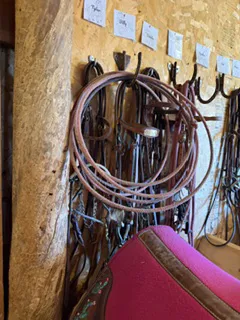
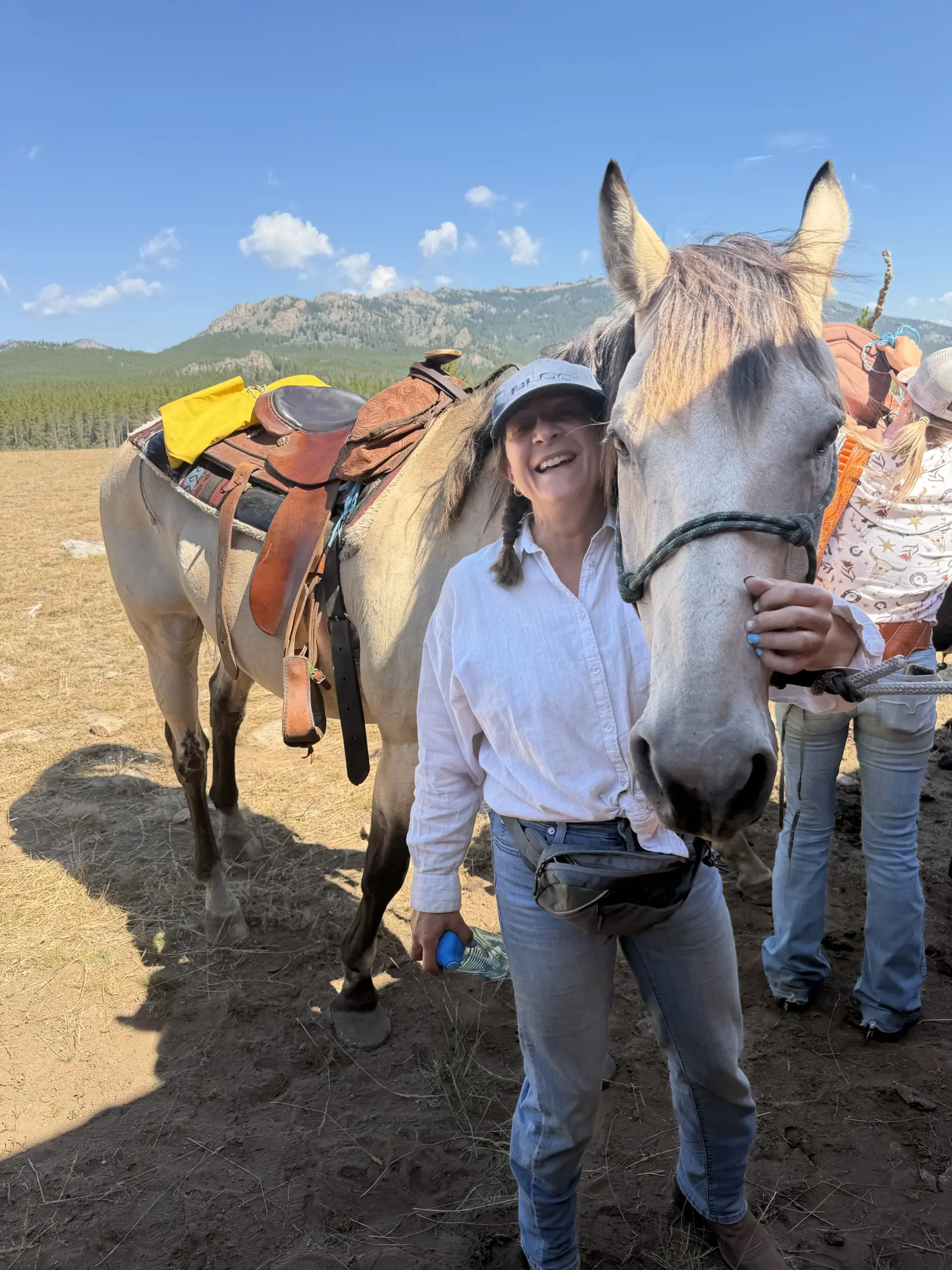
My first experience here was tacking up! Bridle – easy much like ours with the exception of placing over a rope halter, having split reins and no noseband. Huge saddle cloth – yes I could manage that! The saddle though – that was something else and it was good to be reminded of everyday tasks concerning tack that I find as second nature that are not so to less experienced riders.
The girth or rather cinch, was quite different to ours (very wide string ones allowing air to pass through, though I do see similar to these being used a lot by showjumpers these day). I noticed this when managing to haul the great big heavy saddle up onto the horse’s back! It was almost a series of loops to tighten and tight it had to be before mounting, as it was impossible to do once seated in the saddle.
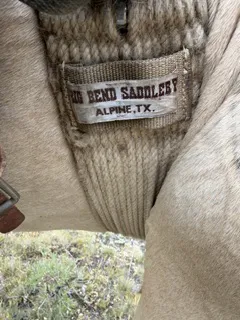
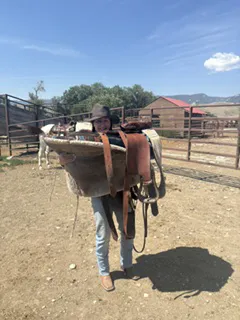

And what a revelation that was! I expected it to be very comfy – absolutely not! They are very wide and stirrups longer than normal, however much comfier for the horse as the load is spread far more evenly. They also fitted the saddle to the rider first and foremost and then used an appropriately padded saddlecloth to fit to the horse.
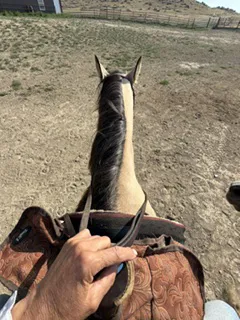
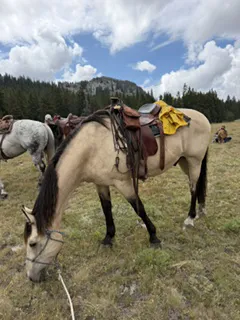
The horn at the front of the saddle was so useful to loop your reins around when stopping (I must admit I dropped both mine once!) and also to hang your bridle from before putting on the horse or when removing for resting of the horses when we were also eating our lunch (conveniently packed in the large saddle bags along with our copious bottles of water). Horses were encouraged to drink from the creeks every time we crossed (and there were many) and also good to hang onto when scrambling up banks or scrabbling down steep ravines – this was real riding!!
I also appreciated the need for being able to ‘rope’ or lasso as when calves needed injections (getting cut or lame) how else are you supposed to catch them when out on 1000’s of acres of plains? This then resonated with the activities we’d seen at the rodeo – it all actually had a purpose. Just like I suppose the original hunting was to catch something to eat, racing being to get an important message or delivery in a hurry, and perhaps eventing to cross all sorts of terrain quickly using speed and endurance (the original roads and tracks and steeplechase phases of eventing years ago).
This therefore led me to think have we gone ‘soft’ with our horses a bit like soft parenting? I know SLO (Social Licence to Operate) has had a massive effect on the training and usage of horses but have we gone too far? On the working ranch, we were sometimes riding for more than six hours a day, moving cattle and calves to fresh pasture and all the horses were masters of their job. We had to go deep into forests where at times we had to navigate huge fallen logs, narrow gaps, low branches etc, as well as on vast open plains and treacherously steep ravines. You could not afford for your horse to mess about being spooky or silly. They couldn’t be allowed to be afraid of our hollering trying to move the cattle that didn’t want to budge or that turned on your horse as they were protecting their calves. Your horse couldn’t be alarmed at cattle charging about, dogs flying up behind to help herd or the odd moose or dirt bikes and trailers, gators or pickups also flying about in some areas.
These were real work horses, looked good, were fit and certainly not dopes on ropes but well-trained and honest.
Someone commented on a post that they looked tired and unhappy – this couldn’t in my opinion be further from the truth – when we rested they took advantage and just chilled. These were horses that at the end of the day were turned out on a 40 acre pasture of lush grass and trotted in the following morning when hearing the quad bikes to help round them up. They then went into a small corral and were then all hitched up to rails ready to be tacked up with no fighting, kicking or squabbling!.
They were fit horses, fed on great pasture at night, not fed corn and allowed to graze when we stopped for dinner and then back out at night. They all were well covered and hardly sweated at all.
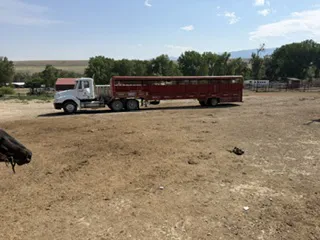
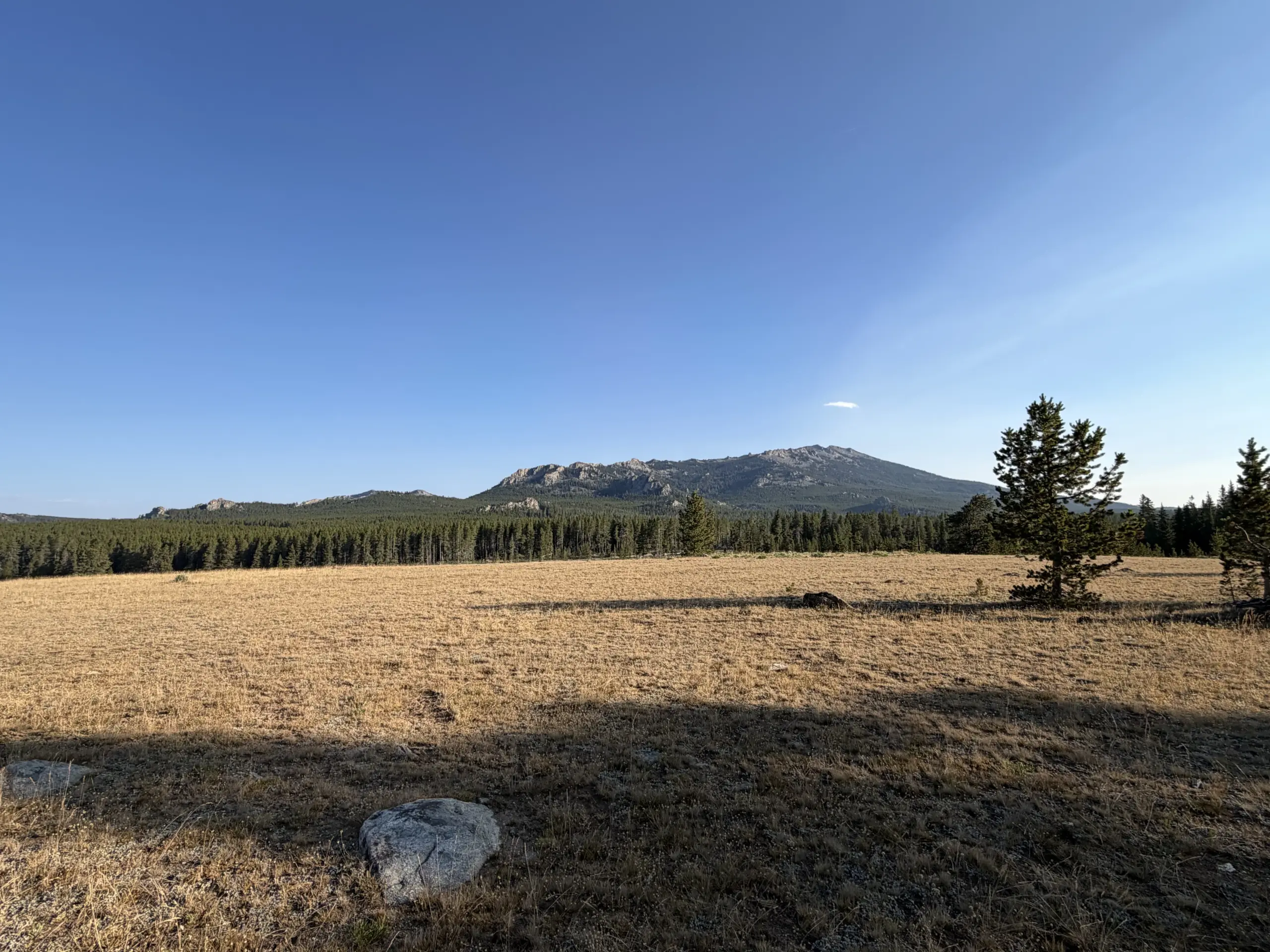
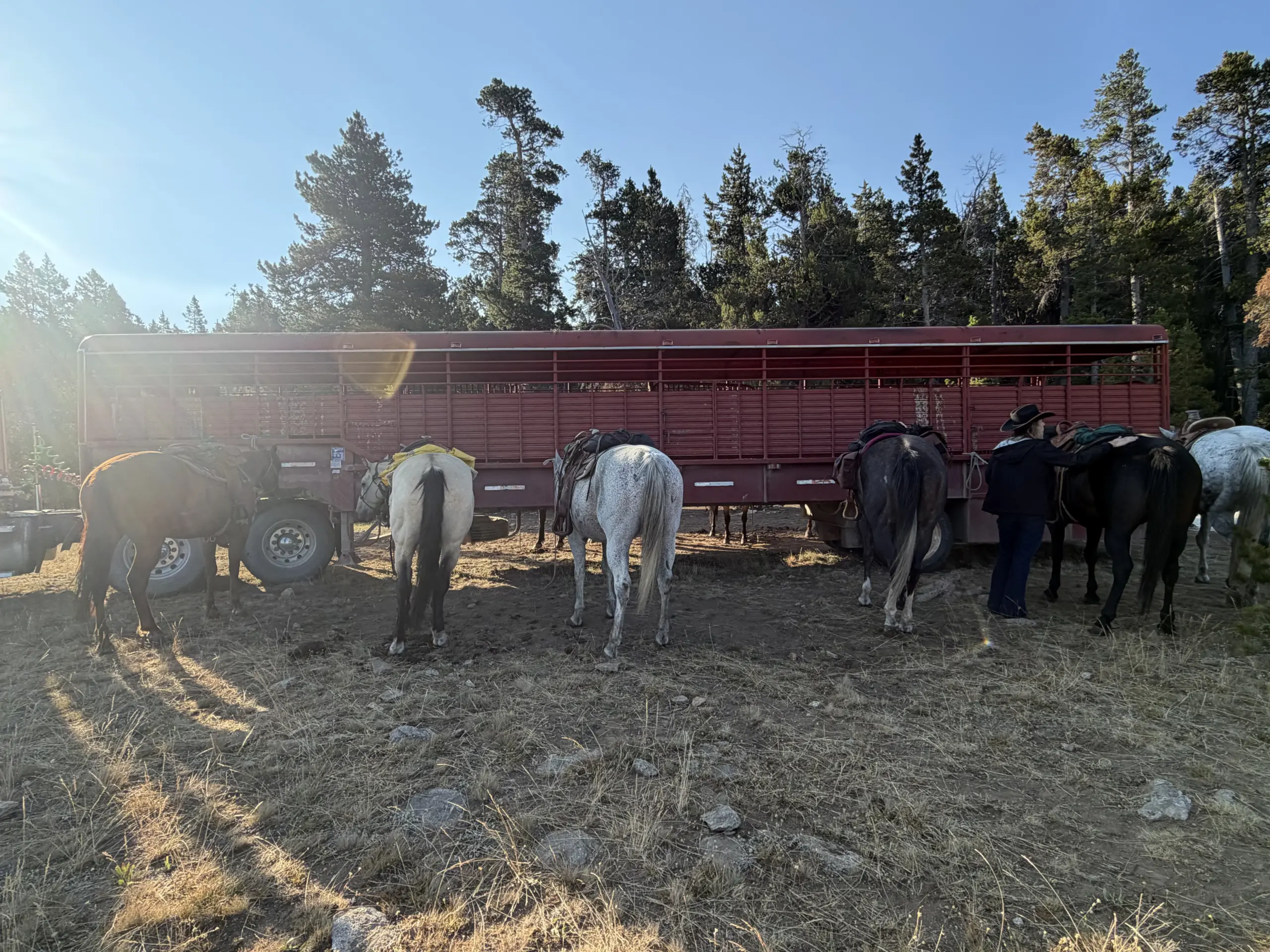
On day two, we were up in the mountains doing the ‘real stuff’ 8500 above sea level. Here we camped under canvas and the horses were corralled at night with the best hay out I’ve ever seen. No laminitis or ulcers in sight!! They were transported up in huge trailers nose to tail with not a single horse not wanting to load!!
They were good to groom and tack up and were all shod all round – they would never have survived the hard sometimes stony ground otherwise. Amazingly none of them lost a shoe in spite of sometimes riding through often areas of deep bog, turning at speed and very hot weather causing feet to dry out. Is this because of their breeding, their action or way of shoeing, or acclimatisation, or all of these aspects? The only difference I could see in how they’d been shod was the omittance of any toe or quarter clips at all on either front or hind shoes.
After working on the ranch for six days, I really didn’t want to leave and could see how their Western culture was intrinsically woven into how thy cared for horses. This also made me more appreciative of the skills I’d seen at the rodeo at Cheyenne.
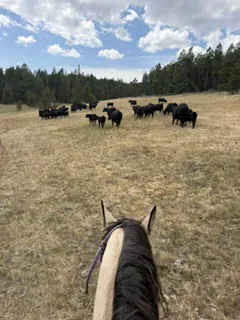
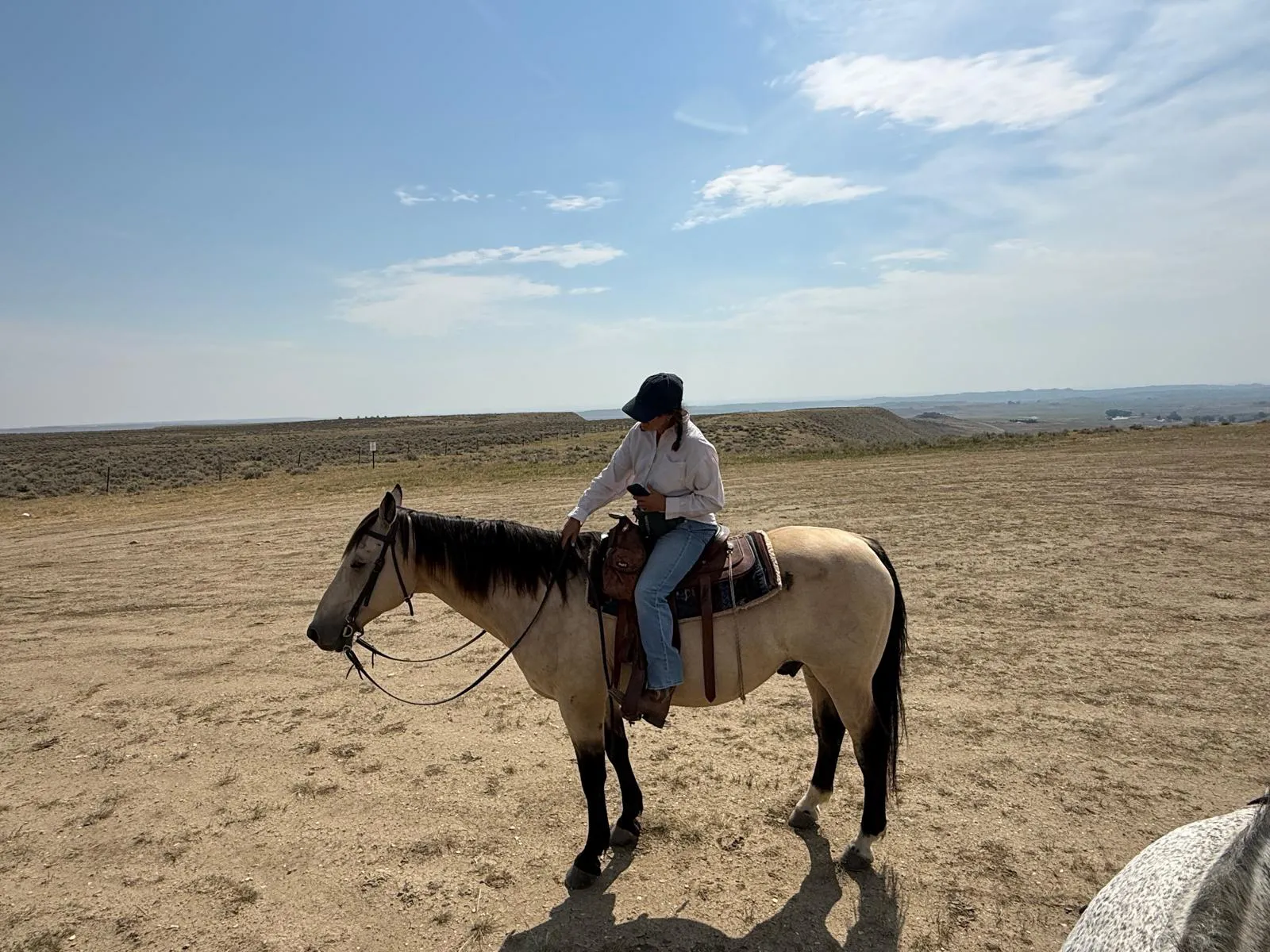
I felt very lucky and honoured to be given my horse Shadow, a buckskin for the week as he was the ranch owner’s lead horse. He was lovely and certainly up for the job, hanging back when needed, muscling in when cattle strayed, being sure footed, kind and respectful of me, as I was of him.
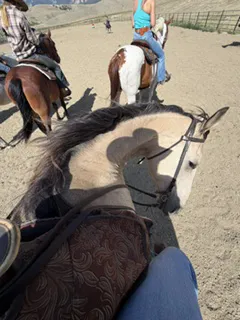
We also visited two local rodeos and children were really encouraged to take part in all sorts of activities being ‘chivvied along’ by a very humorous clown. The clown was also used in bull riding as he was there to help keep the bull rider safe by distracting the bull once the rider had fallen off. He had a barrel to hide in but was also brave enough to do this – some of those bulls were massive and they scored extra points if the bull was stronger and bigger so giving an incentive to bull breeders.
Loved this lad on his horse on the picture below. He was only seven and had so much fun helping at the rodeo – look at his smile!!!
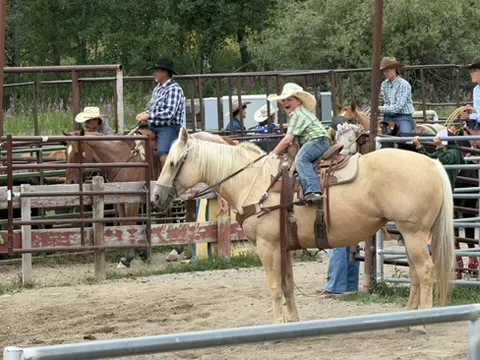
There wasn’t much H&S over there which in some ways was a great thing – it encouraged their young people to ‘have a go’. I do appreciate they have also been brought up with those ways.
I think we should learn a thing or two from this and don’t get me wrong, as a BHS APC I want riders to be safe. However, I get a little dismayed when I see young riders wearing body protectors all the time. Yes, if they are doing XC, but do they really need them when riding in an indoor school on a horse or pony?
They will never develop any core strength at all and be fearful of riding in an ‘unheld’ position. This is something I remember Andy Thomas, Leading Human Equestrian Athlete Physiotherapist (Team GB and United States Equestrian Federation) being very concerned about when I trained alongside him in the assessment and management of horse riders, using the Testt rider symmetry programme.
Throughout my work as a coach and equine massage therapist I see how the imbalances of the rider causes issues in the horse often resulting in sore or atrophied muscles. We already have our balance somewhat disadvantaged by the use of a hard riding hat, especially so on young heads and necks but then to be strapped into a body protector must affect balance, co-ordination and feel even more.
Ironically, two very risky disciplines such as mounted games and vaulting don’t allow body protectors as they would catch and cause harm and vaulters don’t even wear hats!
Don’t get me wrong, I’m not advocating for a second that people abandon wearing hats around horses, but I do feel the risk needs to be assessed correctly with the use of body protectors. I also appreciate when riders perhaps ride at first at a riding school they have body protectors, which are worn possibly as a condition of their insurance. However, when my daughter learned to ride, we just bumbled about the farm and lanes on a pony with no body protector and also when she participated in mounted games. It served her really well when eventing, as she had good core strength and reactions.
I’ve heard a lot lately about the use of simulators to aid riding and whilst I can see they definitely have a place in assisting riders, they cannot replace the feel, smell and reactions of a horse. So long as they are only used as an aide and never a replacement as that would be a sad day in my opinion.
As always I welcome comments about my blogs, they are never meant to force my ideas onto anyone, and I am not saying they are right. I just hope to provoke thoughts and discussion in a helpful and meaningful way, as surely that is how we can all learn from each other.